The bondagers were part of a very old system. A document in 1656 stated that a hind was bound to provide a woman whose labour, at harvest, paid the rent for his house and could be called on as a day labourer when required.
This explains how the name bondager arose out of the bond or agreement made between the farmer and the hind. A hind was a married ploughman. He had started work as a boy (sometimes called the odd laddie) and learnt how to work with and look after one horse. Later when he was sufficiently skilled he would work and care for two horses (referred to as a pair of horse) and be called a hind. When still young he would probably live with his parents but once married he would become part of the bondage system and have to accommodate a bondager whose work at harvest would provide him with a house. Early in marriage the hind’s wife would often be his bondager but when children arrived this was impossible.
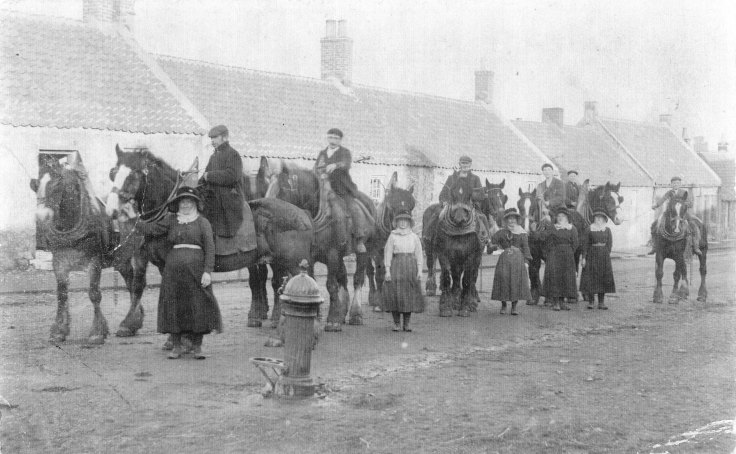
A view often expressed was Pity the poor hind who has to feed the bondager all year!
One major problem was that the cottages were small and accommodating a family, often a large family, was difficult. It is easy to understand that it was a great burden to the hind and family to accommodate this extra worker, the bondager. The hind and his wife were very inventive about how they divided up the cottage space, which was often one room of 15 x 16 feet, or maybe, if they were fortunate, there was a further but smaller room.
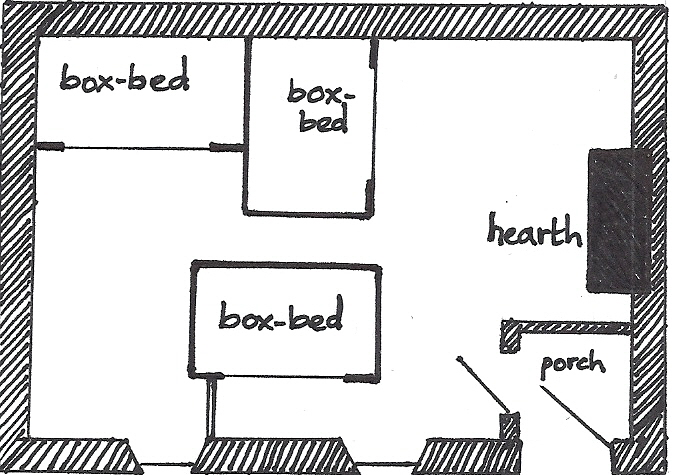
If a hind had a wife or sister or daughter who could act as the bondager, this was an advantage to the family as she brought in another income. Where possible the families liked to stay together and parents in particular liked to keep their children with them as long as possible to supervise and care for them whilst they were growing up.
Family contracts were very common where the father was employed as a hind, a son perhaps as the odd laddie and daughter or daughters as bondagers. In this way a family could secure a good joint income and stay together.
The disadvantages of this arrangement was that sometimes daughters would have preferred to go into service (this was often the only other career option for girls) but family loyalty prevented this. In 1893 Mary and Agnes Black, daughters of the steward at Ilderton, replied when questioned by Mr Arthur Wilson Fox (Royal Commissioner) that We would both rather go to service than work in the fields.
The bondagers would reply, You are never done in service! When we’re done we’re done!
 Bondagers